TL;DR
Many organizations believe they have digitized customer-facing processes because they replaced paper forms with PDFs or online forms. In reality, the underlying workflow often remains manual. Employees still spend time reviewing submissions, chasing missing documents, validating information, routing requests, and updating multiple systems. As transaction volumes grow, these inefficiencies become increasingly expensive and difficult to scale.
The organizations making the greatest progress in digital transformation are shifting their focus away from documents and toward digital journeys. Rather than simply collecting information, they are creating connected experiences that guide customers through complex processes, automate workflows, validate data in real time, and orchestrate interactions across systems and teams. The result is lower operational costs, better customer experiences, and significantly faster time-to-completion.
Intro
Organizations have spent the last decade investing heavily in digital transformation. They have modernized CRM systems, moved workloads to the cloud, adopted eSignature platforms, and launched customer portals. Yet despite these investments, many of the most important customer-facing processes remain surprisingly manual.
Customer onboarding still requires back-and-forth emails. Insurance claims still involve document collection and follow-up calls. Loan applications still require customers to submit information multiple times across different systems. Partner onboarding, policy servicing, KYC reviews, and account opening processes continue to create friction for both customers and employees.
The reason is simple: most organizations focused on digitizing documents rather than digitizing interactions.
For years, PDFs became the default answer to digital transformation. Paper forms were converted into digital documents, eSignatures replaced wet signatures, and email replaced physical mail. On the surface, processes became digital. In reality, very little changed about how work moved through the organization.
A PDF may eliminate paper, but it does not eliminate the operational complexity surrounding the process. Information still needs to be reviewed, validated, routed, approved, and entered into downstream systems. Customers still need to determine which fields are relevant to them. Employees still spend time identifying missing information, chasing documents, and manually updating records.
As organizations scale, these inefficiencies become increasingly difficult to ignore.
The operational cost of manual work is larger than most organizations realize
When executives evaluate customer-facing processes, they often focus on cycle times, completion rates, or customer satisfaction scores. What frequently goes unnoticed is the amount of operational effort required to keep those processes running.
Consider a typical onboarding process.
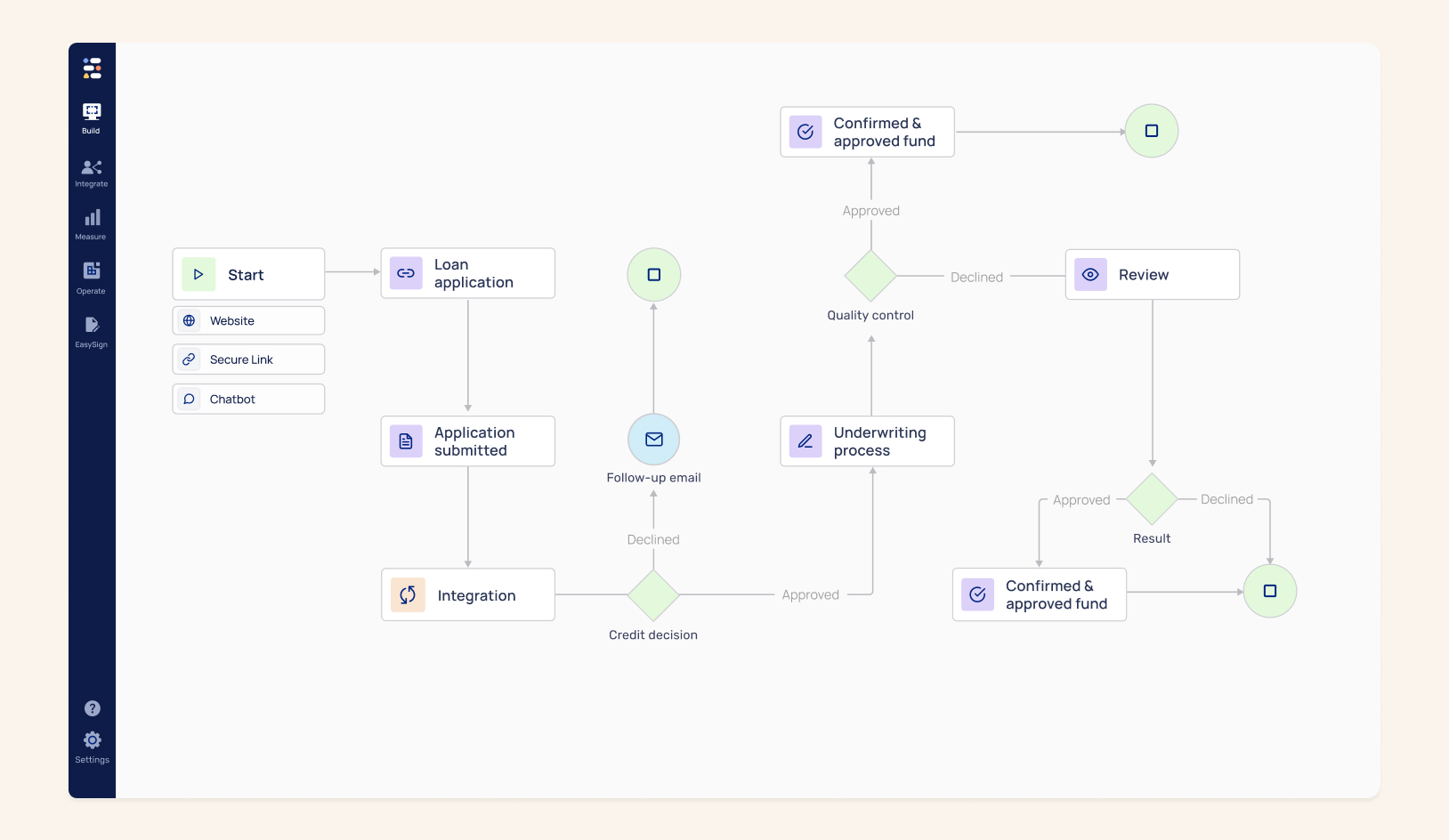
A customer submits an application. An operations employee reviews the submission and notices that a required document is missing. An email is sent requesting additional information. The customer responds several days later. The updated submission is reviewed again and routed to another team. Additional clarifications are requested. Eventually the information is entered into multiple internal systems before the process can move forward.
Each individual step appears minor. Collectively, however, these activities create significant operational overhead.
The challenge is not limited to onboarding. The same pattern exists across claims processing, policy servicing, account opening, distributor onboarding, mortgage applications, compliance reviews, and countless other business processes. Employees spend a disproportionate amount of time moving information between people and systems instead of focusing on activities that create business value.
This is one of the reasons operational costs continue to rise as transaction volumes increase. The process itself does not scale. Organizations often compensate by adding more personnel rather than addressing the underlying workflow challenges.
Why PDFs became the foundation of modern inefficiency
The PDF was originally designed to solve a document problem. It was never designed to solve a workflow problem.
That distinction matters.
Documents are static. Business processes are dynamic.
A document captures information at a specific point in time. A customer journey, on the other hand, evolves continuously based on customer inputs, business rules, compliance requirements, approvals, and interactions with multiple stakeholders.
Yet many organizations continue to force dynamic processes into static documents.
The result is a customer experience that feels increasingly disconnected from modern expectations. Customers are accustomed to personalized digital experiences in nearly every aspect of their lives. They expect applications to adapt based on their circumstances. They expect information to be remembered. They expect status visibility. They expect progress tracking. They expect interactions to work seamlessly across devices.
PDFs cannot deliver these experiences because they were never designed to do so.
More importantly, PDFs generate a second problem that is often overlooked: they separate data from process.
Organizations do not need documents. They need structured, validated, actionable information. Every time information is captured through a PDF, additional effort is required to transform that information into something the business can actually use.
This is where the majority of operational friction originates.
Why internal development often creates a new set of challenges
Recognizing the limitations of manual workflows and PDF-based processes, many organizations decide to build their own solutions.
Initially, the idea appears straightforward. Replace the PDF with an online form. Connect it to the CRM. Store the information in a database. Problem solved.
Unfortunately, customer-facing processes are rarely that simple.
The first version may successfully collect information, but new requirements emerge almost immediately. Business teams request conditional logic. Compliance teams require audit trails. Operations teams need approval workflows. Customer service teams want visibility into transaction status. Customers ask for save-and-resume functionality. Leadership wants reporting and analytics.
What began as a form project gradually evolves into a workflow platform.
This is the point where organizations discover they are not simply building data collection tools. They are building orchestration capabilities that sit between customers, employees, systems, and business processes.
Maintaining these capabilities becomes a long-term commitment. Every regulatory update, process change, system integration, or customer experience improvement requires additional development resources. Over time, organizations find themselves maintaining infrastructure that was never intended to be a strategic differentiator.
The irony is that many companies set out to reduce operational complexity and ultimately create a new source of complexity instead.
The shift from forms to journeys
Leading organizations are increasingly adopting a different mindset.
Rather than asking how to digitize an existing form, they are rethinking how the entire customer interaction should work.
This shift moves the conversation away from documents and toward journeys.
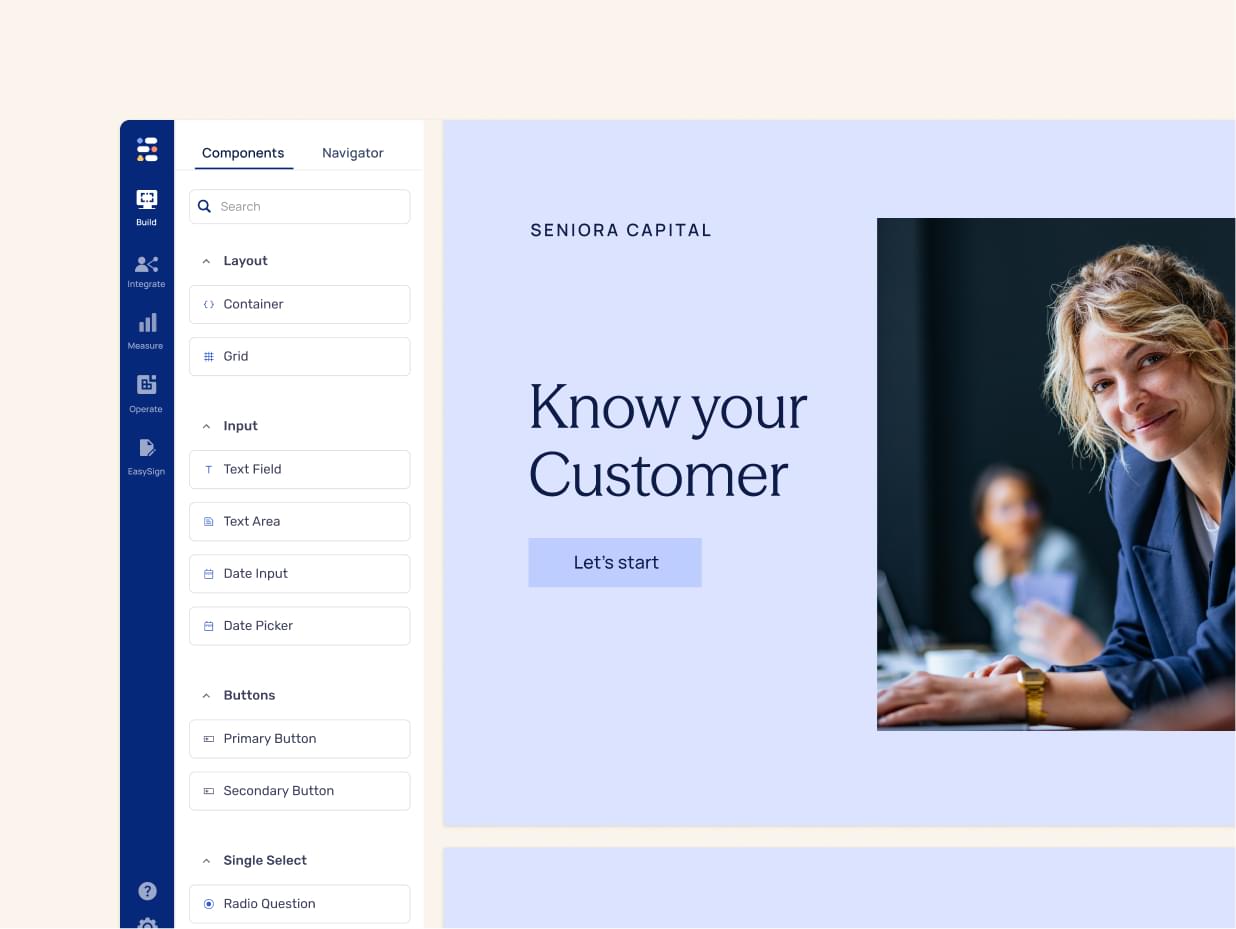
A journey is fundamentally different from a form because it reflects the reality of how customers interact with businesses. It adapts to customer inputs, validates information in real time, requests supporting documentation when necessary, guides users through complex decisions, and orchestrates activities across multiple systems and stakeholders.
Most importantly, journeys treat customer interactions as ongoing experiences rather than isolated transactions.
This distinction becomes increasingly important as organizations seek to improve both customer experience and operational efficiency. The most successful digital transformation initiatives are no longer focused on eliminating paper. They are focused on eliminating friction.
The future of digital transformation is operational simplicity
The next wave of digital transformation will not be defined by new channels, new portals, or new document formats.
It will be defined by an organization's ability to simplify complex interactions.
Customers increasingly expect seamless experiences. Employees increasingly expect automation. Business leaders increasingly expect operational efficiency. Meeting all three expectations simultaneously requires a fundamentally different approach to customer-facing processes.
Organizations that continue to rely on manual workflows, static documents, and fragmented point solutions will find it increasingly difficult to compete. Those that embrace intelligent, connected digital journeys will be positioned to reduce operational costs, improve customer satisfaction, accelerate transaction completion, and adapt more quickly to changing business requirements.
Ultimately, the goal is not to digitize documents.
The goal is to remove the invisible operational friction that exists between customers and the outcomes they are trying to achieve.
FAQ

Forget forms. Create digital customer journeys.