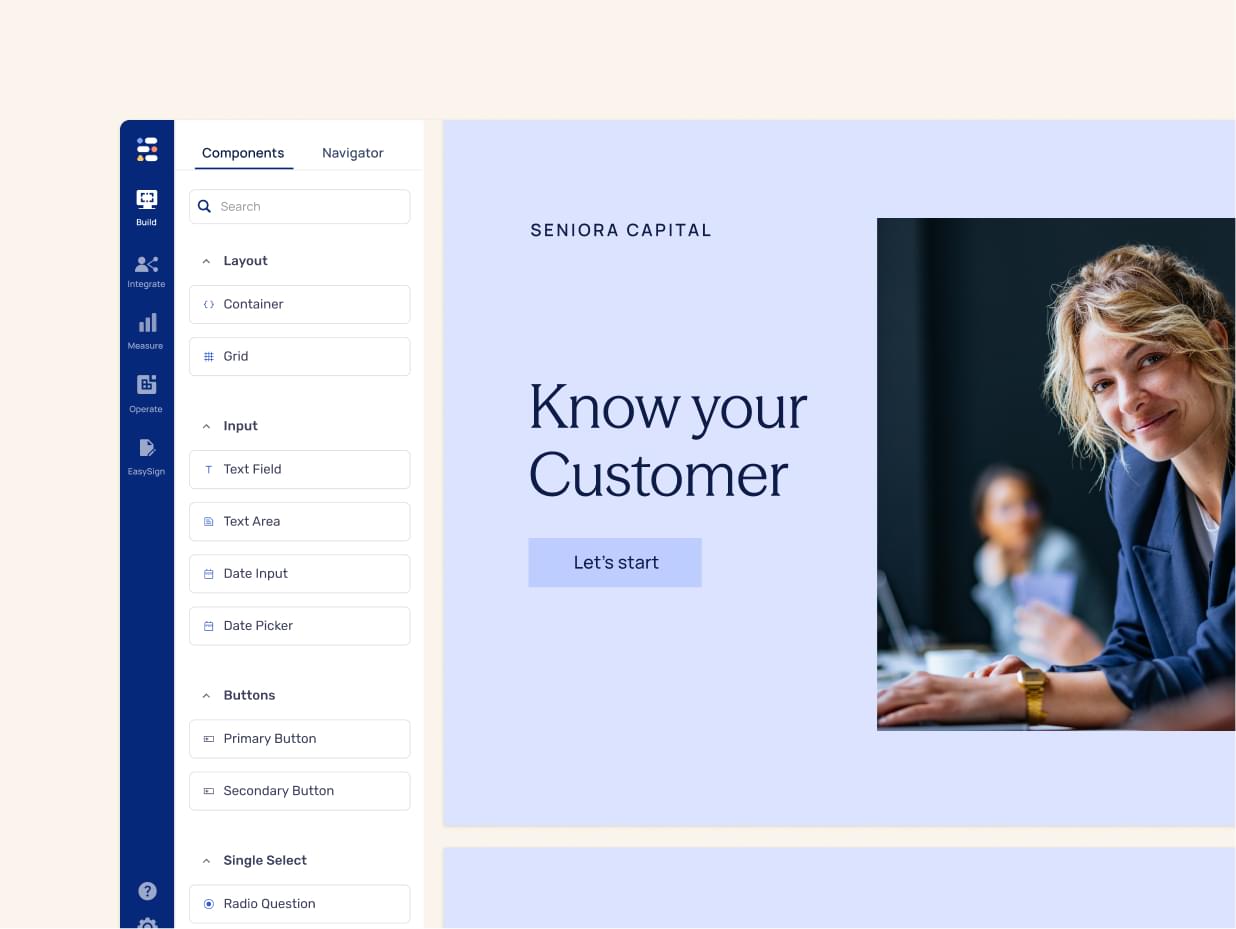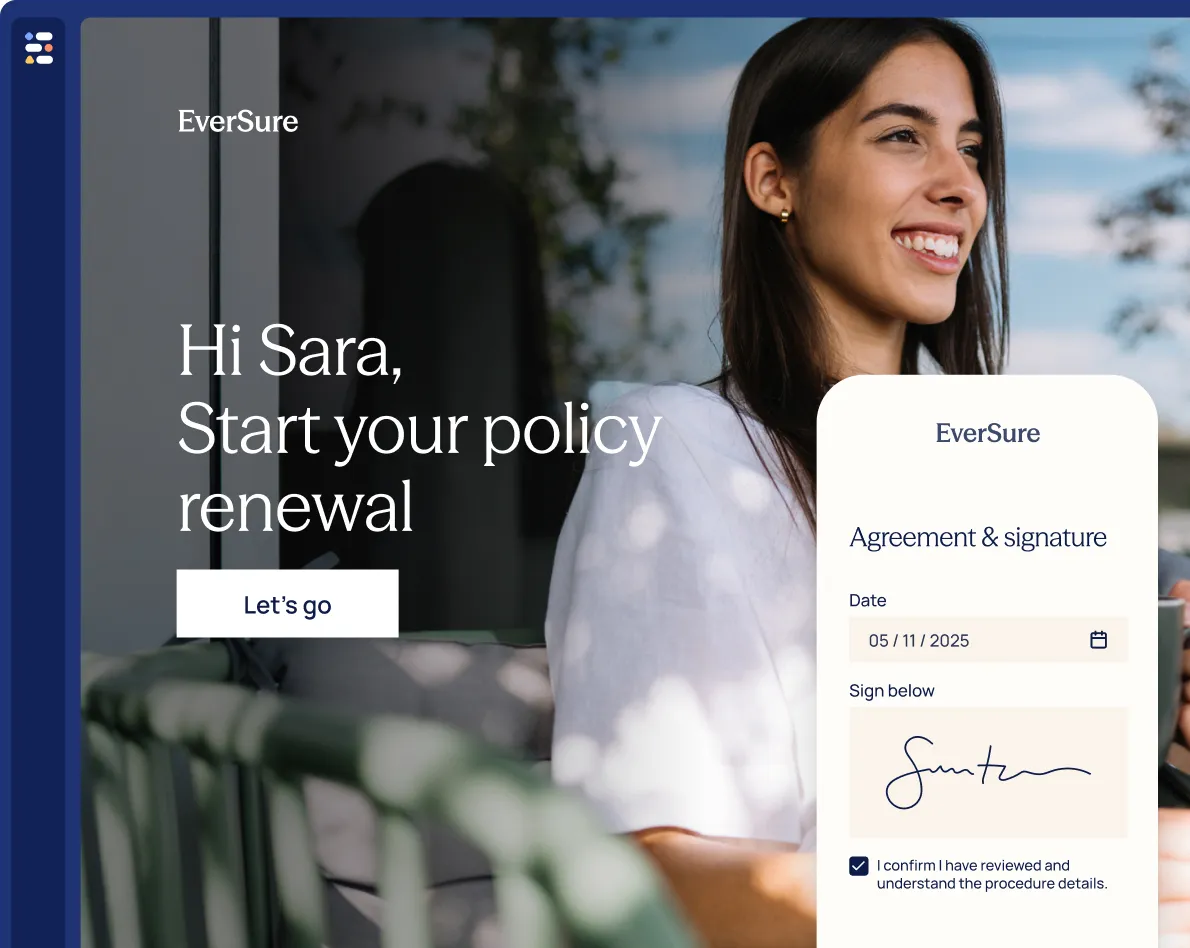
The form is ending as insurance's main interface. What replaces it is intake that adapts to the person, the moment and the device.
For decades, every insurance relationship has run through a form. You buy a policy: a form. You file a claim: a form. You change a beneficiary, add a driver, request a policy loan: another form.
Insurers have spent years digitizing those forms. Most of what they built is the same PDF in a browser. The fields are identical. The questions come in the same order. The customer still does the work of translating their life into the insurer's language.
That is about to change. Not because forms got prettier, but because the way people expect to give information has shifted. They talk to assistants, snap photos of documents, and expect apps to already know who they are. The next generation of insurance intake will meet them there.
Why the static form keeps failing
A static form asks everyone the same questions, in the same order, in the same words. Insurance customers are anything but the same.
Think about who actually fills in insurance paperwork:
- A widow filing a life claim on a policy she has never seen, asked for a policy number she doesn't have.
- An adult daughter applying for long-term care benefits for her father, unsure which medical records count.
- A small business owner answering 60 underwriting questions, half of which don't apply to a three-person bakery.
- An agent re-keying the same client details into a third carrier portal this week.
Each of them hits the same wall. Jargon they don't understand. Fields that don't fit their situation. A missing signature that sends the whole packet back weeks later.
The cost lands on both sides. Customers abandon or call the contact center. Insurers chase incomplete submissions, re-key data and absorb the delay. The form was designed for the insurer's system, not for the person filling it in.
Shift 1: Intake that already knows you
The best question is the one you never have to ask. Insurers already hold most of what their forms request: name, address, policy details, coverage, payment method, agent of record.
Future intake starts from that knowledge. A policyholder renewing a homeowners policy confirms what changed instead of re-entering everything. A claimant opens a link and sees their policy, vehicle and contact details already in place. The journey asks only for what's new.
This also changes tone. "Is your address still 14 Oak Street?" feels like service. A blank address field feels like bureaucracy. The insurer shows it knows the customer, and the customer spends seconds instead of minutes.
Shift 2: Conversation instead of fields
People don't think in fields. They think in stories. "I was backing out of the driveway and hit my neighbor's fence" holds the date, location, cause, third party and damage type, in one sentence.
Conversational intake lets customers answer the way they talk, by chat or by voice. AI turns the story into structured data, then asks only the follow-up questions that matter. "Was anyone hurt?" "Do you have photos of the fence?"
This matters most at emotional moments. A first notice of loss after an accident, or a death claim filed by a grieving family, should feel like talking to someone who understands. Not like completing a tax return.
Conversation won't replace structure. It will sit in front of it. The insurer still gets clean, validated fields. The customer just never has to see them.
Shift 3: Show, don't type
The phone camera is becoming the most important input device in insurance. Instead of typing a VIN, the customer scans it. Instead of describing hail damage, they photograph it. Instead of copying numbers from a medical bill, they upload the bill.
The difference now is what happens next. The document is read in the moment, not after it lands in a back-office queue. If the photo of the driver's license is blurry, the customer knows immediately. If the death certificate is missing a page, the journey asks for it before submission, not three weeks later by mail.
That is the real shift: validation moves from the back office to the moment of capture. Most "not in good order" submissions never get created.
Shift 4: Intake that adapts to who's on the other side
The same claim should not look the same to a policyholder, a beneficiary, an agent and a caregiver with power of attorney. Each knows different things, needs different explanations and carries different authority.
Personalized intake changes the journey based on who is filling it in:
- Role: a beneficiary gets guidance on what a death claim involves; an agent gets a fast, expert path with no hand-holding.
- Context: a commercial applicant in food service never sees questions meant for contractors.
- Language and literacy: terms are explained in plain words, in the customer's language, at the point they're needed.
- Device and pace: a customer can start on a phone at the hospital and finish on a laptop at home, without losing progress.
The insurer still collects everything compliance and underwriting require. Each person just takes the shortest, clearest route to it.
Shift 5: One journey across channels and people
Insurance intake rarely involves one person in one sitting. A life policy change may need the owner, the insured and a new beneficiary to sign. A commercial submission moves between the business owner, their broker and the underwriter. A claim can start on a call and finish online.
Today, each handoff breaks the process. The agent emails a PDF. The customer prints, signs and scans it. Someone re-keys the result.
The future journey is shared. Each participant gets their own personalized step, in the right order, on their own device. A contact-center rep can send a secure link mid-call and watch the customer complete and sign it before hanging up. Everyone sees where things stand. Nothing goes back in the mail.
What doesn't change: compliance, consent and accuracy
More intuitive doesn't mean less rigorous. Insurance intake carries legal weight that a retail checkout never does.
Every new method still has to produce a record that holds up: who provided the information, what disclosures they saw, what they consented to, and when they signed. State-specific forms, HIPAA authorizations and suitability requirements don't disappear because the customer used voice instead of a keyboard.
The winners will treat compliance as part of the design, not a final page of fine print. The disclosure appears at the right moment, in plain language. The signature happens in the same session. The audit trail is created automatically. Done well, the most intuitive journey is also the most defensible one.
What insurers should do now
The insurers who get this right won't start with technology. They'll start with the moments where intake hurts most.
- Pick one painful journey. A death claim, a long-term care benefit application, a beneficiary change, a small commercial submission. Map who fills it in and where they get stuck.
- Stop asking for what you already know. Prefill from the policy and admin systems, and ask customers to confirm, not re-enter.
- Validate at the moment of capture. Catch the missing page, blurry photo or unsigned section before submission, not after.
- Design for every role. Build distinct paths for policyholders, beneficiaries, agents and caregivers.
- Measure completion, not just digitization. Track first-time-right submissions, drop-off and time to completion. A digital form nobody finishes is still paper.
The last form your customer fills out won't look like a form at all. It will feel like a short, helpful conversation with an insurer that already knows them, and the data behind it will be cleaner than anything a PDF ever produced.
At EasySend, this is the problem we work on every day: turning insurance's most complex forms into journeys people actually finish.
FAQ

Forget forms. Create digital customer journeys.