At 6:40 on a Saturday morning after a hailstorm, a policyholder is eleventh in the queue. She is parked next to a dented roof and a cracked windshield. Every minute she holds adds to your cycle time and, eventually, to your loss adjustment expenses. FNOL insurance starts with First Notice of Loss (FNOL), the first report of an incident to an insurer, and it sets the tone for the whole claim. When it's slow or sloppy, costs creep up, customers get angry and fraud gets easier to hide. Fixing it turns a painful admin step into something your team can actually rely on.
Understanding FNOL Insurance in Claims Operations
FNOL is the gateway to the claims process. It's the moment a policyholder, an agent or a third party tells the carrier that a loss has happened. That applies to every line, whether personal auto, commercial property, workers' compensation or health. And the quality of what you collect in that first contact decides how well the rest of the claim goes.
Treating it as data entry is a mistake we see often. Intake sets off the back-end work: confirming coverage, verifying identity, guessing at severity, setting an initial reserve and picking an adjuster. If the data arrives incomplete, wrong or late, every one of those steps drags.
For years FNOL meant two things, a phone call or a paper form. A customer service rep took the call and typed the details into a core system such as Guidewire or a homegrown database. Other claimants mailed or faxed a static PDF that someone in the claims department indexed by hand. Both routes buckle during a regional storm, when call volume jumps all at once and nobody has staffed for it.
Carriers that do this well stopped seeing FNOL as a cost center. They treat it as a digital touchpoint, and they build digital customer journeys that collect validated data right after the incident. Photos, GPS coordinates and a first statement come in through self-service, so intake moves much faster and the initial processing cost falls with it.
The Anatomy of a Legacy FNOL Workflow
Why does claims intake keep needing a rebuild? Because the friction is built into the structure. A legacy process hands the claim from policyholder to call center rep to back-office indexer to field adjuster, and each handoff is a place where data gets lost, mistyped or delayed.
Here is the sequence most carriers still run, more or less:
- Initial incident reporting: The policyholder suffers a loss, then calls a hotline during business hours or fills in a bare web contact form.
- Manual data transcription: A call center agent asks the standard questions and types the answers into the policy administration system or claims portal.
- Coverage verification: The agent, or someone in the back office, checks that the policy was active on the date of loss, looks at deductible limits and confirms the peril is covered.
- Document and evidence gathering: The carrier mails or emails a claim packet asking for police reports, repair estimates and damage photos.
- Manual indexing and triage: Mailroom or intake staff scan whatever comes back, attach it to the digital file and assign an adjuster by hand.
- Adjuster contact and investigation: The adjuster opens a fragmented file, phones the policyholder to confirm basic facts again and books a field inspection.
Three problems follow from that order. Queues at the call center produce abandoned calls and late reports. Typing by hand leaves wrong policy numbers and missing details. And because supporting evidence is only requested after the first call, the chasing begins, which can push claim assignment out considerably.
Surge events make it worse. Picture a hurricane landing on one coastline: the phones saturate almost at once, waits stretch, and claims leaders are left with a backlog that takes a long time to clear. Legacy workflows don't scale for that, and no amount of overtime fixes it.
The Real Operational Costs of Manual FNOL Intake
A phone-first or paper-heavy intake carries costs you can put numbers on. Claims directors should weigh direct spend such as call center staffing and processing overhead against indirect spend, which includes inflated Loss Adjustment Expenses (LAE) and customers who leave.
Staffing is the biggest direct line. A phone-based intake call is a long one. Add the rep's pay, facilities, telephony and quality monitoring, and a single phone-assisted FNOL transaction carries a meaningful cost. Across a full year of claims, intake alone adds up fast. We'd check this against your own cost per contact before it goes into a business case.
The indirect costs often exceed the direct ones. These are the drivers worth looking at first:
- Data re-entry and corrections: Reps and policyholders type invalid policy numbers, wrong contact details or vague descriptions of the incident, and adjusters lose time confirming what actually happened.
- Rental car and storage fee inflation: On auto claims, each day spent waiting for a completed FNOL adds to storage yard charges and the daily rental bill. According to J.D. Power, 2025, the average cycle time for repairable vehicles was 19.3 days, down from 22.3 days a year earlier.
- Increased fraud exposure: Late reports are harder to test. A claim is easier to challenge when the photos, data and timestamps were captured at the scene of the event. The Coalition Against Insurance Fraud says fraud steals at least $308.6B every year from American consumers.
- Litigation risk: A slow first response frustrates claimants, some of whom then hire a public adjuster or a lawyer, and that raises the payout.
Retention follows the same pattern. The claim is the moment of truth for most policyholders, and a multi-step intake full of repeated outbound calls and double-checks can wear down their goodwill before the claim is even assigned. Among auto and homeowners customers who rate their digital claim experience as poor or just OK, 52% are likely to leave or not renew, according to the J.D. Power 2025 U.S. Claims Digital Experience Study. A self-service option removes much of that pain and cuts admin overhead at the same time.
The prize is large. McKinsey sees the potential for a reduction of 25 to 30 percent in loss adjustment expenses as insurers modernize claims with digital tools and better analytics.
Critical Components of Modern Digital FNOL Systems
An effective digital FNOL process is not a static web form dropped onto a website. A flat form can't handle conditional logic, live validation or photos and video. What you need is an interactive intake that adapts to the answers it receives and walks the user through complex reporting one step at a time.
In practice, a digital FNOL system needs these capabilities:
- Dynamic form logic and branching: Show only the fields that apply to the policy type, the nature of the incident and earlier answers. A cracked windshield on an auto policy needs a very different path than a multi-vehicle collision with injuries.
- Rich media and photo capture: Policyholders should be able to upload high-resolution images, a video walk-through or an audio note straight from a phone. That gives adjusters clear evidence taken at the scene instead of a blurry photo reconstructed later.
- Geolocation and timestamping: Capturing device location automatically gives you accurate incident coordinates, and you can cross-reference weather databases to validate a storm claim without a phone call.
- Third-party data enrichment: The intake calls external APIs to pre-fill policy details, decode a vehicle identification number (VIN) or verify property boundaries before the user hits submit.
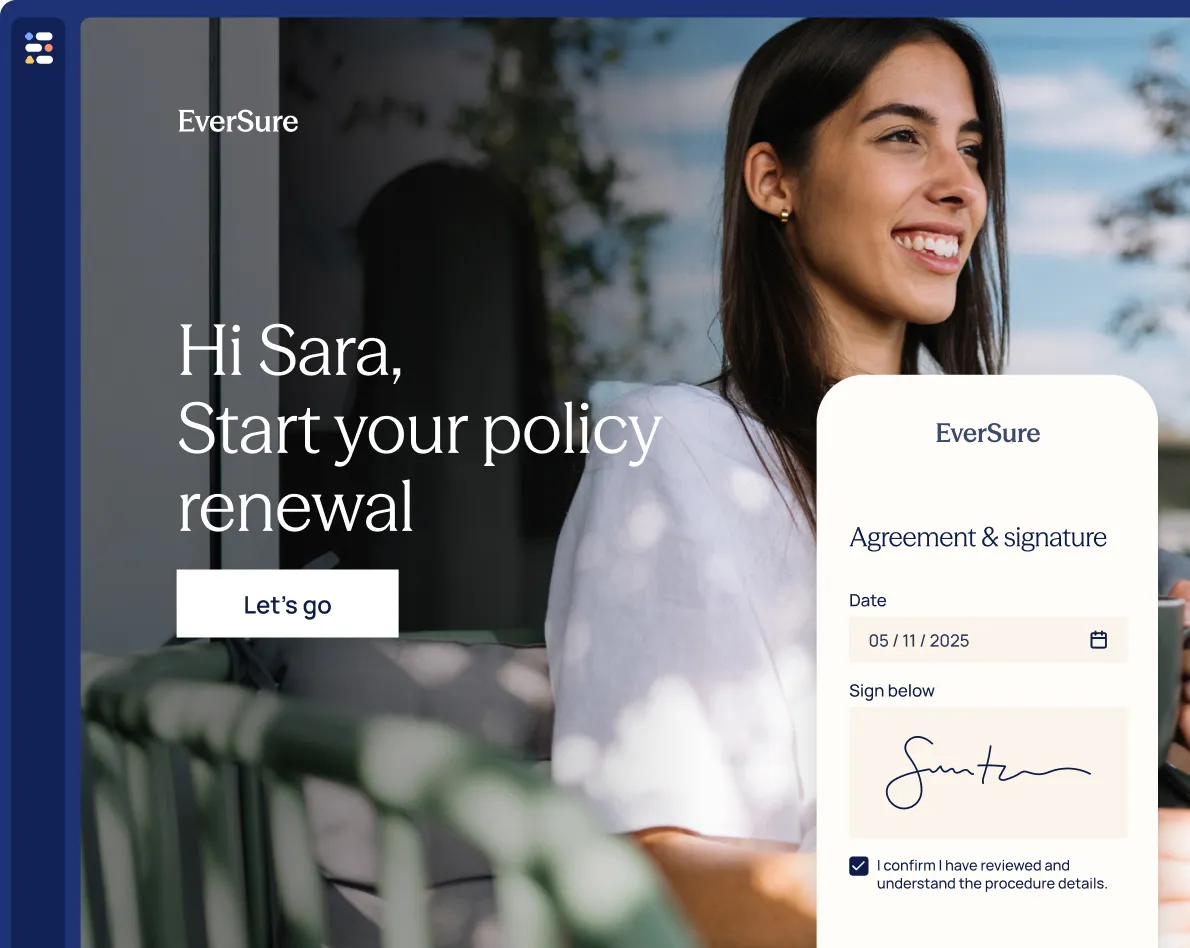
- Integrated digital signatures: With EasySign built in, claimants can review, complete and sign authorization forms, loss statements and medical releases in the same session.
The payoff is simple. You capture structured, validated data at intake, so the back-and-forth mostly disappears. Adjusters open a complete file with verified evidence and can start work right away. Updates matter after submission too. Receiving adequate digital updates is a top driver of satisfaction, yet insurers deliver on it just 22% of the time, per the J.D. Power 2025 study.
Comparing FNOL Intake Channels
Most carriers run several intake channels at once, since customers don't all want the same one. Efficiency, speed of launch and data completeness differ a lot between them, though. The table below compares the common channels across the operational factors that matter most.
- Call Center Intake: Completion Rate: High; Data Accuracy: Medium (Human error risk); Time to Market: Immediate (Legacy baseline); Integration Depth: Manual entry into core system; Maintenance Overhead: High (Staffing and phone costs)
- Static Web PDFs / Forms: Completion Rate: Low; Data Accuracy: Low (No dynamic validation); Time to Market: Fast; Integration Depth: None (Requires manual re-keying); Maintenance Overhead: Medium (High support burden)
- Native Mobile App: Completion Rate: Medium; Data Accuracy: High (Device feature access); Time to Market: Slow (Custom code); Integration Depth: Custom API links; Maintenance Overhead: High (Requires ongoing app updates)
- Digital Journey Platform: Completion Rate: High; Data Accuracy: High (Real-time rules and validation); Time to Market: Fast; Integration Depth: Connectors and APIs to core systems; Maintenance Overhead: Low (Visual drag-and-drop maintenance)
A native app does give you full camera access. But ask yourself whether a driver standing on a shoulder with a dead bumper will download an app at that moment. Most won't. That adoption friction is why a journey sent by SMS or a web link tends to work better in a crisis, since it behaves like an app without the install.
Driving Straight-Through Processing (STP) in Claims Intake
Straight-Through Processing (STP) means a claim is submitted, evaluated, validated and paid out entirely through automated rules, with nobody touching it. Claims organizations chase high STP rates because the cost per claim falls to a fraction of the usual level and settlement can be close to instant.
Digital FNOL is the engine underneath it. Automated routing can't safely handle a claim when the intake data is messy. One missing field is enough to pull the file out of the automated lane and into an adjuster's queue, where the speed advantage is gone.
So what happens the moment someone submits an incident report? Your claims platform runs a set of rules, usually these:
- Automated coverage validation: The system checks policy state, endorsement limits and active status directly against the core policy administration platform.
- Rules-based severity triage: Submissions are sorted by complexity, and low-complexity claims, such as single-vehicle glass damage or a small property loss under a set dollar threshold, are tagged for automated settlement.
- Instant fraud scoring: Live checks against anti-fraud databases look at submitted data, IP addresses, geolocation markers and claim history, and they flag suspicious filings before any funds are reserved.
- Automated partner dispatch: For claims that qualify, the intake sends a preferred repair shop, tow service or glass vendor without waiting for an adjuster to approve it.
Not every claim fits, of course. Large losses and injury claims fall outside STP limits. For those, the structured FNOL data at least makes sure the file lands on the right specialist's dashboard with a calculated reserve recommendation already attached.
Overcoming Core System Integration Barriers
The hardest part of modernizing FNOL is rarely the front end. It's joining a modern interface to back-end systems that were never meant to talk to it. Mainframes, custom-built databases and aging policy platforms often lack flexible endpoints, and that makes real-time sync a headache for internal IT.
Some carriers try to build the intake portal in-house. We understand the instinct, but in our experience it's where timelines go to die. Developers hand-code form logic, deal with browser quirks, write API connectors and build secure file storage. Then a project scoped as a quick build can turn into a long initiative that strains the budget.
Modern intake platforms avoid much of that with pre-built connectors and flexible APIs. Connecting to a claims system such as Guidewire, or to Salesforce, can let the intake read from and write to the core system. That changes what the user sees. A policyholder types a policy number and a date of birth, the system queries the core database, and name, address, vehicle details and covered drivers appear on screen. They don't retype anything, the form finishes faster, and what's submitted matches the core record exactly.
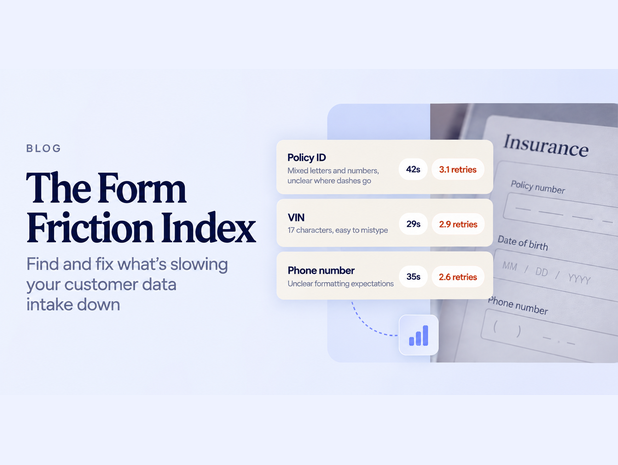
Front-end validation matters just as much. Strict formats on phone numbers, zip codes, VINs and loss dates keep garbage out of your core platforms. That cuts the downstream errors that someone in operations would otherwise spend a Tuesday untangling.
Operational Metrics for Evaluating FNOL Performance
If you can't measure a digital FNOL rollout, you can't defend it. Claims executives need a baseline before launch and the same numbers afterward. Comparing them across digital claims workflows shows the real return and points to what to fix next.
The metrics most claims leaders watch are these:
- Intake completion rate: The share of policyholders who finish the digital FNOL after opening it. A low number usually points to a form that's too long, confusing questions or a technical problem.
- Average handling time (AHT): For phone intake it's the length of the call, and for self-service it's the elapsed completion time. Moving callers to self-service brings call center AHT down and frees reps for the complicated cases.
- First contact resolution (FCR): The percentage of claims where the intake, signatures and evidence were all collected at the first touchpoint, with no second round of calls.
- Cycle time to initial touch: Time between FNOL submission and the first meaningful action by an adjuster or an automated step. Shorter cycles lower overall loss adjustment expenses.
- Loss Adjustment Expense (LAE) ratio: The direct cost of investigating and settling claims relative to total payouts, which efficient FNOL tends to push down.
Real-time journey analytics make the metrics useful. Suppose the data shows people abandoning the claim at the photo upload step. An administrator can change a field requirement or add a short help tip, and nobody has to wait for an IT release to do it.
Where EasySend Fits into Digital FNOL and Claims Intake
EasySend is an AI-powered platform built for self-service across complex customer data intake, digital customer journeys and automated back-end workflows. For a claims director it replaces slow paper forms, hard-to-use PDFs and costly phone intake with responsive digital journeys that connect to your existing CRM and core insurance platforms.
EasySend also published a video, EasySend's Operations Portal, if you want a look at the claims side.
The platform covers most of what FNOL and claims operations need through a set of products:
- Journeys: A visual builder that lets non-technical operations teams create dynamic multi-step FNOL workflows. Teams turn static forms into mobile-responsive experiences with their own branding, field validation and branching. EasySend reports a deployment timeline of 14 days from idea to live, published on its digital customer journeys platform overview.
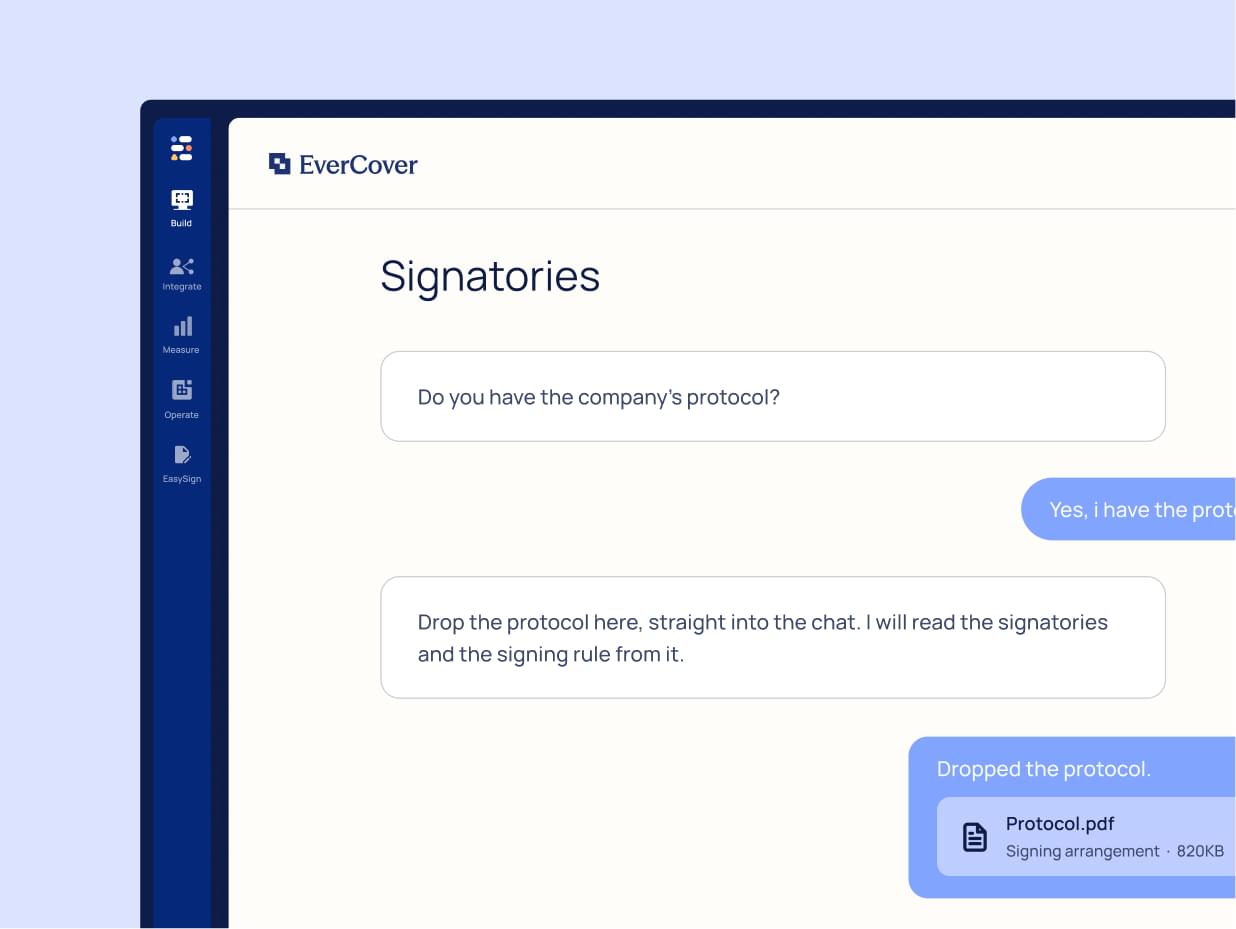
- EasySend AI: An AI co-pilot that includes the AI Journey Builder and the AI PDF Converter, so teams can generate intake journeys from documents they already have. AI assistants also support users during intake by reviewing uploaded documents, checking data and asking policyholders for whatever is missing.
- DynamicDoc: It generates personalized settlement agreements, claim submissions, settlement agreements and dispute summaries from one adaptable template inside Microsoft Word, producing dynamic PDFs driven by what customers entered.
- EasySign: An integrated eSignature product that lets policyholders and third parties sign claims authorizations, medical releases and loss statements within the journey, with parallel or serial signing. EasySign has processed more than 20 million electronic signatures, as described on the EasySign product page.
- Workflow Manager: It maps end-to-end business logic, data routing, automated notifications and integration triggers, and it gives you visibility with human-in-the-loop oversight and role-based access control.
- Operations Portal and Analytics: Claims managers can follow submission status in real time, see which requests were opened or expired, resend requests and study funnel performance step by step to find the bottleneck.
Results matter more than feature lists, so here are three. After the August 2023 Maui wildfires, carrier RLI used EasySend to digitize its Proof of Loss workflow in two days. That gave affected policyholders a fast way in, as told in the RLI customer story.
Clal Insurance moved paper-heavy customer processes online, with 75 digital processes in year one and more than 200 since. It reports 60-80% process conversion and over 350,000 yearly transactions, according to the Clal Insurance story. On the sales and service side, Harel Insurance saw 15% higher sales-process conversion and 20% fewer outbound customer calls, published in the Harel Insurance case study.
Compliance stays your responsibility. EasySend lists enterprise security certifications including SOC 2 Type II, GDPR, HIPAA, PCI DSS, ISO/IEC 27001, and ADA compliance, with data protected by TLS 1.3 encryption in transit and AES-256 encryption at rest. EasySend lists integrations with platforms including Salesforce, Guidewire, Microsoft Dynamics 365, monday.com, Zendesk, and cloud storage such as Box, Dropbox and Google Drive.
Transforming FNOL into an Operational Advantage
First Notice of Loss sets the benchmark for every claim that follows. A call center queue and a stack of paper forms inflate costs, stretch cycle times and frustrate customers when they're least patient. An intelligent digital journey changes that, because you get complete data up front, routing you can automate and lower loss adjustment expenses.
It doesn't take a multi-year system rebuild or a pile of custom code. Drag-and-drop workflow platforms with core system connectors let operations leaders launch a secure self-service FNOL channel without a rebuild. That improves your claims operations, and your customers get a fast resolution from day one.
Wondering whether your intake could be simpler? Book a demo with EasySend and we'll walk through it with you.
More Questions
Does digital FNOL eliminate the need for phone call centers?
No. Digital FNOL gives policyholders a self-service option if they prefer digital intake or want to skip the hold time. Call center reps are still essential for complex losses, catastrophe events and callers who simply prefer to phone.
What compliance and security standards apply to digital FNOL solutions?
Digital FNOL solutions have to protect sensitive personally identifiable information (PII) and health details. Platforms should support high security standards such as SOC 2 Type II, GDPR, HIPAA and ISO/IEC 27001, with strong encryption in transit (TLS 1.3) and at rest (AES-256).
FAQ

Forget forms. Create digital customer journeys.