Distributor onboarding is often slowed down by fragmented processes: multiple forms, manual data entry, document back-and-forth, compliance checks, and multi-party approvals. Traditional PDFs and email-based processes cannot handle these complexities efficiently.
Digital onboarding journeys solve this by guiding distributors step-by-step through a structured process with pre-filled data, real-time validation, document uploads, and automated approvals, dramatically reducing onboarding time while improving data quality and compliance.
Introduction
Distributor relationships are critical for companies operating in industries like manufacturing, insurance, financial services, and technology. But onboarding a new distributor is rarely simple.
The process typically involves collecting business information, verifying compliance documents, signing agreements, coordinating multiple stakeholders, and ensuring data ends up in the right internal systems.
Yet in many organizations, distributor onboarding still relies on PDF forms, spreadsheets, emails, and manual approvals. What should be a straightforward business process often becomes slow, frustrating, and error-prone.
When onboarding takes weeks instead of days, the impact is significant:
- Sales cycles slow down
- Revenue is delayed
- Operations teams spend hours chasing documents
- Distributors experience unnecessary friction
This article explains why distributor onboarding processes often slow down, and how digital onboarding journeys can transform the experience for both companies and their partners. For a broader look at the approach, see distributor onboarding workflows.
Digital onboarding journeys can combine data collection, document uploads, approvals, and eSignatures in one guided experience. This is the same shift from forms to digital customer journeys that organizations are applying to other complex customer-facing processes.
Organizations looking to digitize these workflows can use EasySend Journeys to build and manage multi-step onboarding processes without replacing their existing systems.
The real reasons distributor onboarding slows down
Distributor onboarding rarely fails because of one single issue. Instead, delays occur because the process involves multiple steps, stakeholders, and systems that are difficult to coordinate manually.
Below are the most common causes of slow onboarding.
1. Too many forms and documents
Distributor onboarding usually requires collecting a large amount of information:
- Company details
- Legal entity information
- Tax forms
- Compliance documents
- Banking details
- Distribution agreements
- Product certifications
In many organizations, these requirements are handled through separate PDFs or static forms.
This creates several problems:
- Distributors receive multiple forms at once
- The forms may request overlapping information
- Different teams own different documents
- Updates require sending new versions
Instead of completing a structured process, distributors must navigate a confusing set of documents without guidance.
The result is predictable: incomplete submissions, missing information, and repeated back-and-forth communication.
2. Manual data entry and duplicate work
Another major bottleneck occurs after forms are submitted.
Operations or sales teams often need to:
- Re-enter distributor information into CRM systems
- Upload documents to internal portals
- Validate compliance information manually
- Cross-check data across systems
Manual data entry introduces several risks:
- Data inconsistencies
- Typos and errors
- Duplicate records
- Compliance issues
Even worse, teams spend valuable time transferring data instead of reviewing or approving it.
A well-designed onboarding system should eliminate these tasks by syncing collected data directly with core systems such as CRM platforms.
3. Complex approval workflows
Distributor onboarding often requires approvals from several internal stakeholders:
- Legal teams reviewing agreements
- Compliance teams verifying documentation
- Finance teams validating payment details
- Sales managers approving the partnership
When approvals are coordinated through email, the process becomes slow and difficult to track.
Common problems include:
- Approvals getting lost in email threads
- Unclear ownership of next steps
- Missing documents delaying approvals
- Lack of visibility into process status
Without a structured workflow, onboarding becomes dependent on manual coordination between departments.
4. Missing or invalid documents
Distributors frequently submit incomplete documentation.
Examples include:
- Expired certifications
- Incorrect tax forms
- Missing identity verification
- Documents uploaded in the wrong format
Because traditional onboarding processes lack validation, these issues are usually discovered only after the submission is reviewed manually.
That leads to additional rounds of emails requesting corrections.
Every missing document adds days—or even weeks—to the onboarding timeline.
5. Poor distributor experience
From the distributor's perspective, onboarding often feels confusing.
They may receive:
- Multiple PDFs
- Several emails from different teams
- Requests for documents they already provided
- Unclear instructions on what to complete next
This creates friction at the very beginning of the relationship.
In some cases, distributors delay completing the process simply because the instructions are unclear or time-consuming.
A poor onboarding experience can even affect long-term partnerships.
What a modern distributor onboarding process should look like
To remove these bottlenecks, organizations are increasingly replacing static forms with guided digital onboarding journeys.
A digital journey transforms onboarding from a collection of disconnected tasks into one structured workflow.
Instead of sending multiple forms, the company provides a single guided experience that:
- Collects all required information
- Validates data in real time
- Requests supporting documents
- Generates agreements
- Routes approvals automatically
The distributor simply follows the process step by step.
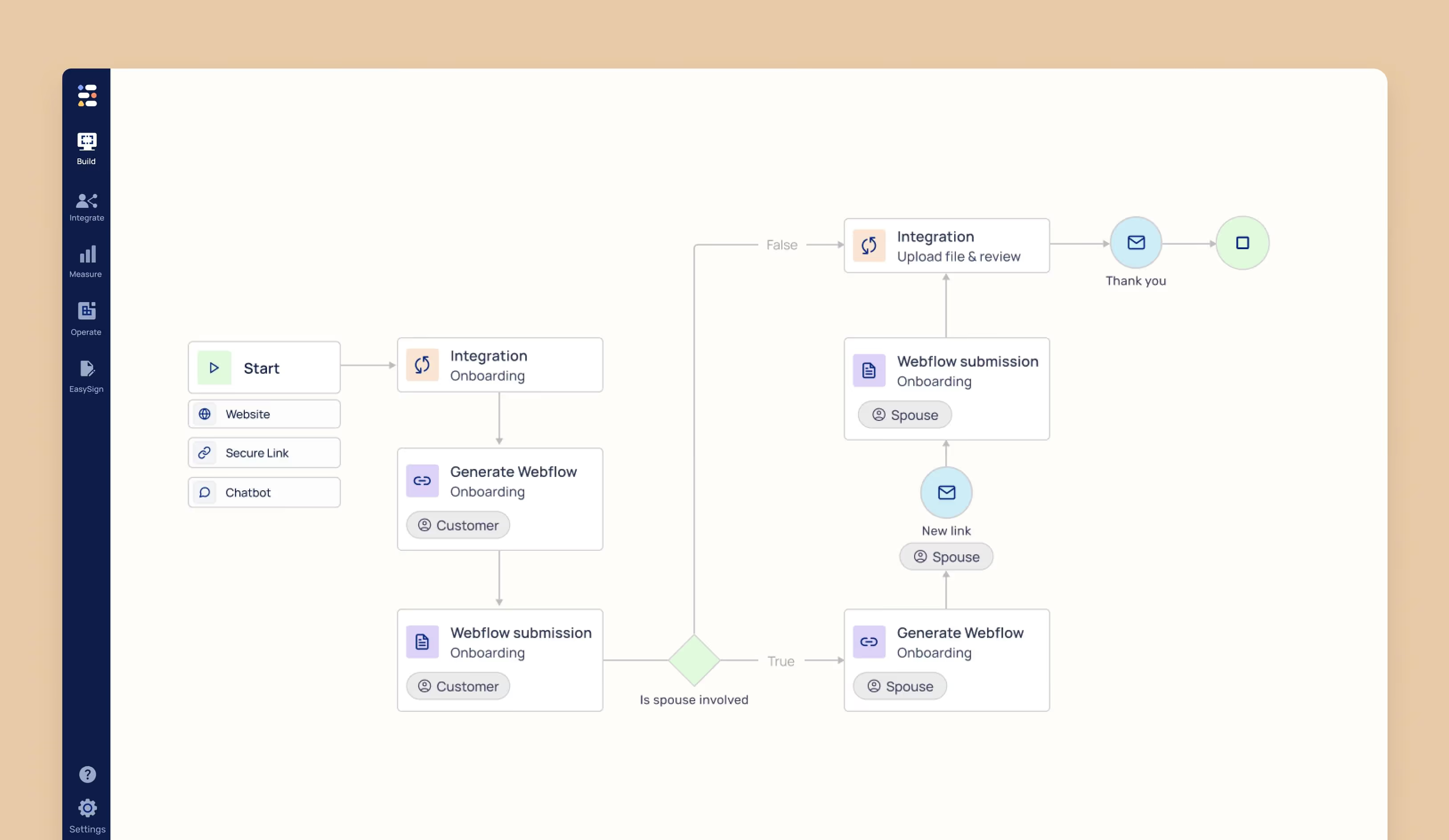
Step 1: Guided onboarding experience
Instead of multiple forms, distributors receive a single onboarding link.
The process dynamically adapts based on answers provided.
For example:
- A distributor operating in multiple countries may see additional compliance fields
- A small reseller may skip certain certification steps
- A distributor selling specific products may receive tailored agreements
This dynamic approach reduces complexity while ensuring all required data is captured.
You can see how this type of structured workflow is typically implemented using digital onboarding journeys like those described in the
customer onboarding workflows guide.
Step 2: Pre-filled distributor data
To further simplify onboarding, systems can pre-populate information from CRM platforms.
For example:
- Company name and contact details
- Existing partner records
- Sales account information
Pre-filling data reduces effort for distributors while improving accuracy.
It also eliminates duplicate data entry for internal teams.
Step 3: Document uploads and validation
Instead of emailing documents, distributors upload files directly during the onboarding process.
Modern onboarding journeys support:
- Drag-and-drop document uploads
- Required document checklists
- File format validation
- Automatic document tagging
This ensures all required documentation is collected before submission, preventing delays later in the process.
For organizations handling complex document workflows, this approach is similar to the structured document collection described in
digital document intake workflows.
Step 4: Automated agreement generation and signatures
Once the distributor completes the required information, the system can automatically generate agreements.
These agreements may include:
- Distribution contracts
- Compliance statements
- Partner program terms
Documents can then be sent for signature immediately, often involving multiple signers.
This eliminates manual document preparation and speeds up approvals.
Many companies implement this as part of broader
multi-party eSignature workflows.
Step 5: Automated internal approvals
After submission, the onboarding journey automatically routes requests to the appropriate internal teams.
For example:
- Compliance reviews certifications
- Legal verifies agreements
- Finance approves payment details
- Sales confirms distributor status
Each stakeholder receives a notification and can approve directly within the workflow.
This ensures approvals happen in parallel or sequentially based on defined rules, dramatically reducing delays.
How digital journeys accelerate distributor onboarding
When companies replace manual processes with structured digital journeys, the impact is immediate.
Organizations typically see improvements in several areas.
Faster onboarding cycles
Because information is validated and documents are collected upfront, onboarding cycles can shrink dramatically.
Processes that once took weeks can often be completed in days.
Reduced operational workload
Automation removes many manual tasks, including:
- Data entry
- Document chasing
- Status tracking
- Approval coordination
Operations teams can focus on reviewing submissions rather than managing the process.
Better distributor experience
Distributors benefit from:
- Clear instructions
- One guided process
- Faster approvals
- Less back-and-forth communication
A smooth onboarding experience sets the tone for a productive partnership.
Higher data quality
Real-time validation ensures submitted information is accurate and complete.
This improves:
- CRM data integrity
- Compliance reporting
- Operational efficiency
Why many onboarding systems still fail
Despite the benefits of digital onboarding, many companies still rely on basic form builders or static portals.
These tools often lack capabilities required for complex onboarding processes:
- Conditional workflows
- Multi-step journeys
- Multi-party approvals
- System integrations
- Dynamic document generation
As a result, organizations still depend on manual coordination to complete the process.
True onboarding transformation requires a system that can orchestrate the entire workflow, from data collection to approvals and document signing.
How EasySend helps companies streamline distributor onboarding
Platforms like EasySend address these challenges by enabling companies to build fully digital onboarding journeys without complex development.
Instead of static forms or disconnected tools, EasySend provides a dynamic customer interaction layer that connects distributor interactions directly with internal systems such as Salesforce.
Using EasySend, organizations can:
- Create guided distributor onboarding journeys
- Collect structured partner data and documents
- Validate information in real time
- Generate and send agreements automatically
- Manage multi-party approvals and signatures
- Sync onboarding data directly into CRM systems
Because workflows can be configured without heavy development, teams can launch new onboarding processes quickly and adapt them as requirements evolve.
Final thoughts
Distributor onboarding should not slow down partnerships or delay revenue.
Yet in many organizations, outdated processes, PDFs, emails, manual approvals, and fragmented systems, continue to create unnecessary friction.
Digital onboarding journeys offer a far more efficient approach.
By guiding distributors through a structured process that collects data, documents, and approvals in one place, companies can dramatically reduce onboarding time while improving accuracy and compliance.
As partner ecosystems continue to expand, organizations that modernize onboarding workflows will gain a clear advantage: faster partnerships, better distributor experiences, and more scalable operations.
FAQ

Forget forms. Create digital customer journeys.