Form builders are ideal for collecting information through simple digital forms, while journey builders are designed to manage complete onboarding workflows. For organizations onboarding partners, distributors, vendors, or customers, journey builders provide significant advantages by combining data collection, document management, approvals, eSignatures, and integrations into a single guided experience. As onboarding processes become more complex, journey builders offer the flexibility and orchestration needed to deliver faster, more efficient, and scalable onboarding experiences.
Introduction
Digital forms have been a standard tool for collecting business information for decades. With modern form builders, companies can quickly create online forms to gather contact details, applications, or survey responses.
But B2B onboarding processes are fundamentally different from simple data collection.
Whether a company is onboarding a distributor, vendor, customer, or partner, the process often includes:
- Multiple forms
- Supporting document uploads
- Internal approvals
- Legal agreements
- Compliance checks
- Data syncing across internal systems
In other words, onboarding is not a single interaction—it is a workflow involving several steps and participants.
This raises an important question for many organizations modernizing their processes:
Is a form builder enough, or do you need a journey builder?
Understanding the difference between the two can help organizations choose the right approach for complex onboarding workflows. The distinction is closely related to the difference between digital customer journeys and traditional forms, particularly when a process needs to connect customer data collection with downstream workflows.
For more complex onboarding processes, EasySend Journeys combine data collection, document uploads, approvals, eSignatures, and integrations in a single guided experience.
What is a form builder?
A form builder is a tool designed to create digital forms for collecting information.
Typical capabilities include:
- Drag-and-drop form creation
- Basic conditional logic
- Field validation
- Data submission storage
- Simple integrations with other tools
Form builders are widely used because they are easy to set up and flexible for many types of data collection.
Common use cases include:
- Contact forms
- Event registrations
- Surveys and feedback
- Simple applications
- Lead capture forms
For straightforward information collection, form builders work well.
However, the limitations become clear when forms are used to manage complex operational processes.
Where form builders struggle in B2B onboarding
B2B onboarding processes typically involve much more than filling out a form.
Consider a typical onboarding workflow for a partner or distributor. The process might include:
- Submitting company information
- Uploading compliance documents
- Completing tax forms
- Generating agreements
- Signing contracts
- Internal approval from legal or finance
- Syncing data with CRM systems
Trying to manage this entire workflow through a form builder often leads to several challenges.
1. Forms collect data but don’t manage workflows
Most form builders are designed for single submissions, not multi-step processes.
Once a form is submitted, the process usually continues outside the platform:
- Documents are emailed
- Approvals happen manually
- Data is transferred into internal systems
This creates fragmented workflows that require manual coordination between teams.
2. Limited support for multi-party processes
Many B2B onboarding processes involve multiple stakeholders.
For example:
- A distributor submits company details
- A legal representative signs agreements
- Internal teams review compliance documents
- Finance approves payment details
Traditional forms are built around a single respondent, making it difficult to coordinate multi-party interactions.
3. Poor handling of document workflows
B2B onboarding often requires collecting several documents such as:
- Business licenses
- Insurance certificates
- Compliance documentation
- Signed agreements
Form builders may support file uploads, but they typically lack capabilities for:
- Structured document checklists
- Document validation
- Automated document generation
- Routing documents for signatures
As a result, companies still rely on manual document management after submission.
4. Limited integration with operational systems
Even when form builders integrate with tools like CRM platforms, they often send data as simple records or notifications.
But onboarding processes usually require deeper integration with systems such as:
- CRM platforms
- workflow automation tools
- document management systems
- compliance systems
Without structured workflow orchestration, organizations still need to manually connect these steps.
What is a journey builder?
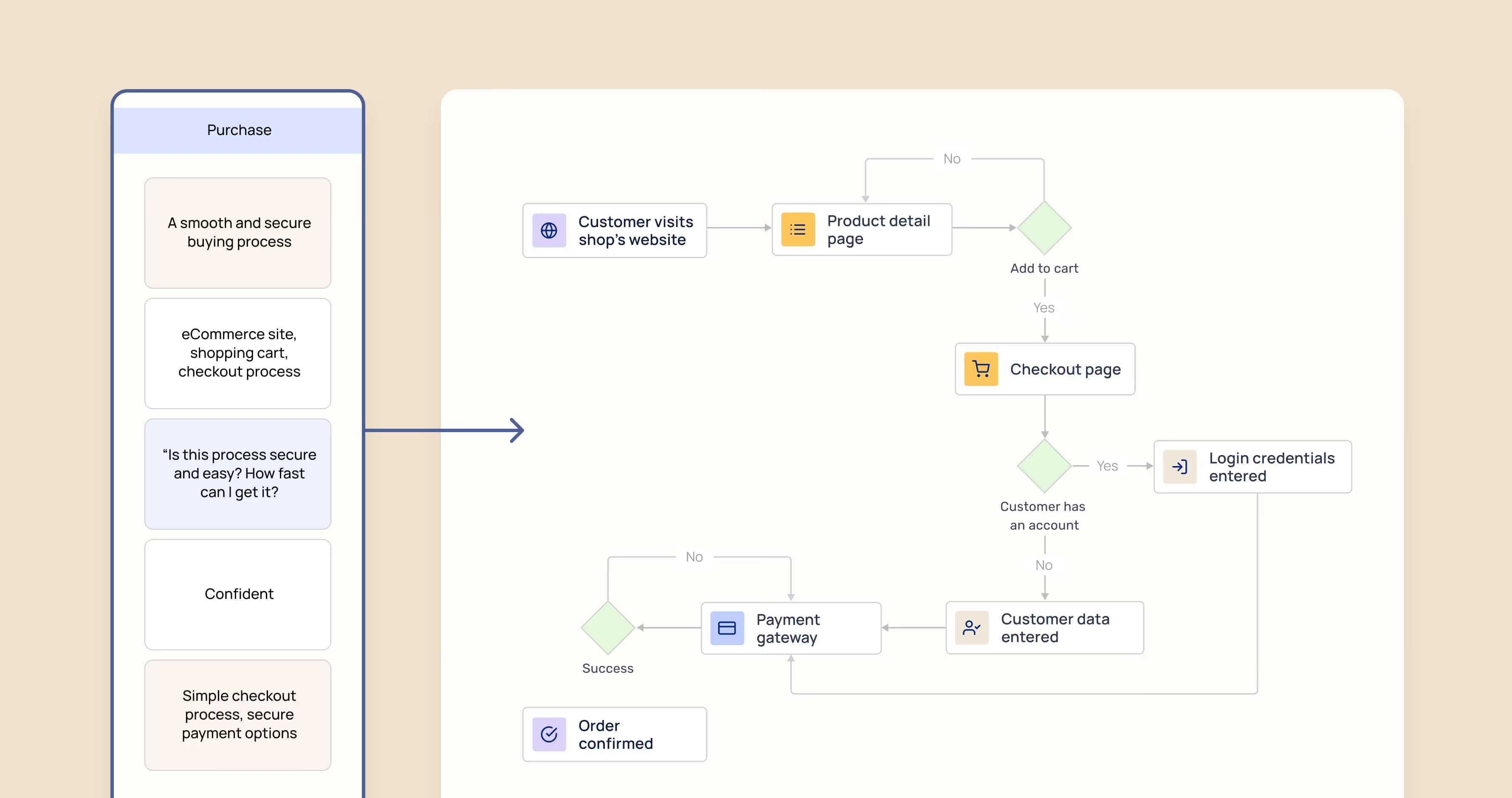
A journey builder goes beyond collecting information. It orchestrates an entire process from start to finish.
Instead of a single form submission, a journey builder creates a guided workflow that adapts based on user inputs and process requirements.
A journey might include:
- Multi-step forms
- Conditional logic
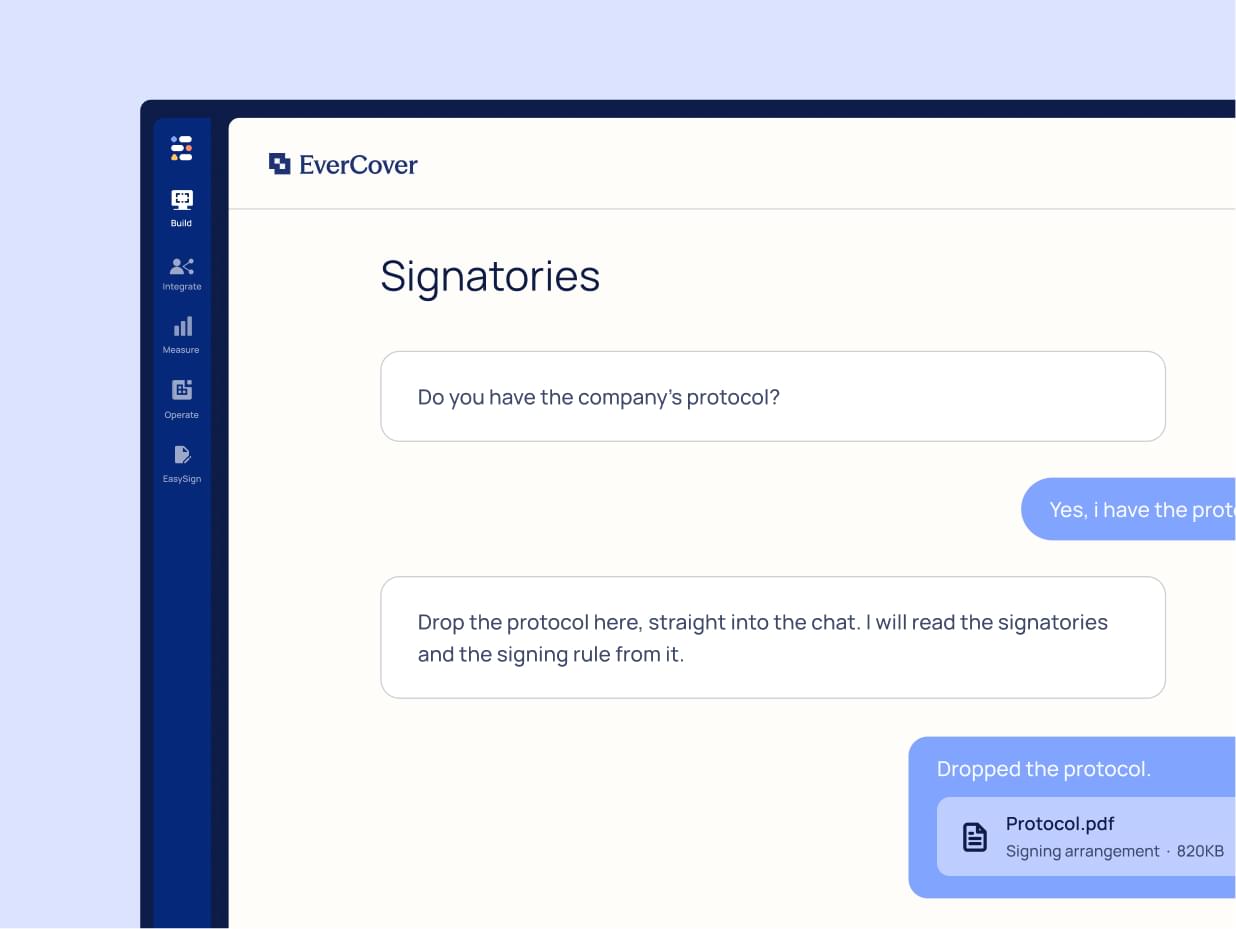
- Document uploads
- Real-time validation
- Dynamic document generation
- Multi-party approvals
- eSignature workflows
- Integration with internal systems
In other words, the journey builder manages the entire lifecycle of the interaction.
How journey builders improve B2B onboarding
Journey builders address the complexity of onboarding by structuring the process as a guided experience rather than a collection of forms.
Guided multi-step onboarding
Instead of sending multiple forms, companies provide a single onboarding journey that guides users step by step.
Each step can dynamically adapt based on the information provided.
For example:
- Different partner types may see different fields
- Compliance requirements may vary by region
- Additional documentation may be requested based on answers
This approach ensures the onboarding process captures exactly the information required.
Integrated document collection
Journey builders handle document workflows more effectively than traditional forms.
Features often include:
- Document upload checkpoints
- Required document validation
- Automatic document generation
- Agreement signing within the workflow
This structured approach is similar to the processes described in modern
digital document intake workflows.
Multi-party collaboration
Journey builders support interactions involving multiple participants.
For example:
- A distributor completes the onboarding form
- A legal contact signs agreements
- An internal manager approves the partnership
These interactions can be orchestrated automatically within the same process.
Many organizations implement this as part of broader
multi-party eSignature workflows.
Direct integration with core systems
One of the biggest advantages of journey builders is their ability to integrate with operational systems.
For example, onboarding data can automatically sync with:
- CRM systems
- workflow platforms
- internal databases
This eliminates manual data entry and ensures all teams work with accurate, up-to-date information.
A structured onboarding journey also aligns closely with broader
customer onboarding workflows used across many B2B organizations.
Form builders vs. journey builders: key differences
When form builders are enough
Despite their limitations, form builders still play an important role.
They are often the right solution for:
- Simple information collection
- Lead capture
- Surveys and questionnaires
- Event registration forms
For processes that involve only one interaction and no follow-up workflow, form builders remain efficient and easy to deploy.
When journey builders are the better choice
Journey builders become valuable when processes involve:
- Multiple steps
- Document collection
- Approvals
- Several participants
- Integration with internal systems
These requirements are common in B2B onboarding scenarios such as:
- Partner onboarding
- Distributor onboarding
- Vendor onboarding
- Financial applications
- Compliance processes
In these cases, using a form builder often leads to fragmented workflows and manual coordination.
A journey builder provides the structure needed to manage the process end-to-end.
How EasySend helps organizations move beyond forms
Platforms like EasySend are designed specifically to handle complex onboarding workflows that traditional form tools cannot manage.
Instead of static forms, EasySend enables organizations to create dynamic digital journeys that guide users through multi-step processes while connecting directly to internal systems like Salesforce.
With EasySend, companies can:
- Build guided onboarding journeys
- Collect structured data and documents
- Validate information in real time
- Generate agreements automatically
- Coordinate multi-party approvals and signatures
- Sync data directly into CRM systems
This allows organizations to move from simple data collection to fully automated onboarding workflows.
Final thoughts
Form builders transformed how companies collect information online. But B2B onboarding processes have evolved beyond simple form submissions.
Modern onboarding requires coordination between multiple stakeholders, documents, approvals, and systems.
Journey builders address this complexity by turning fragmented tasks into structured digital workflows.
For organizations managing partner, vendor, or customer onboarding, the shift from forms to journeys is not just a technology upgrade, it is a fundamental improvement in how business processes are designed and executed.
FAQ

Forget forms. Create digital customer journeys.